

Degree: Doctor
Affiliation(s):
FCUP
Bio
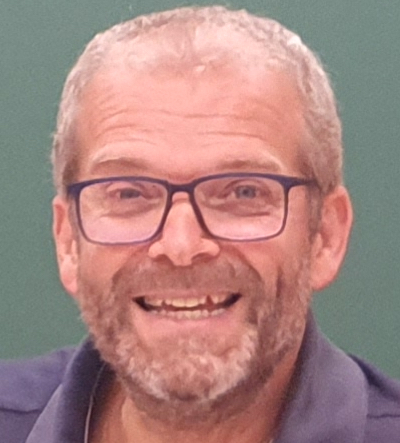
João Carlos de Matos Paiva is Associate Professor in the Chemistry Department (Education), of the Faculty of Sciences of the University of Porto - PORTUGAL. He is member of the Education, Science Communication and Society area in the Centre for Research in Chemistry of the University of Porto (CIQUP). He has a particular interest in research on the subject science-education-religion.
Publications
Showing 5 latest publications. Total publications: 67
Show all publications
1.
Contextualized teaching of the topic Gases and Dispersions, in 10th grade Chemistry, using the air quality platform QualAr and ChatGPT,
in REVISTA EUREKA SOBRE ENSENANZA Y DIVULGACION DE LAS CIENCIAS, 2026, ISSN: 1697-011X, Volume: 23,
Article, Indexed in: crossref, scopus, unpaywall, wos DOI: 10.25267/rev_eureka_ensen_divulg_cienc.2026.v23.i2.2203 P-01C-H7D
Article, Indexed in: crossref, scopus, unpaywall, wos DOI: 10.25267/rev_eureka_ensen_divulg_cienc.2026.v23.i2.2203
P-01C-H7D
Abstract
In general, students have difficulties in learning Chemistry content, and it is necessary to find teaching strategies to minimize these difficulties. The contextualized teaching approach plays a fundamental role in promoting learning by relating scientific content to real-life situations close to students' daily lives. While teaching the topic Gases and Dispersions with a 10th-grade class, a mixed-methods research project was developed to determine the extent to which high school students are able to interpret real data on air quality in Portugal from the QualAr platform and to critically evaluate the accuracy, clarity, and rigor of the responses generated by ChatGPT to exercises on the same topic. Twenty students participated in this research, and data collection involved questionnaires, interviews, and document analysis of written records. The results demonstrated that students showed interest in using the QualAr platform, benefiting from structured scripts and real data. This research resulted in several indicators that reinforce the added value of promoting hands-on approaches associated with the use of real data to contextualize the topics taught, as well as the integration of technological tools in classes, which have pedagogical potential for developing critical thinking in students and promoting scientific literacy for citizenship.
2.
REPRESENTAÇÕES MULTIMODAIS NO ENSINO DE QUÍMICA: CONCEPÇÕES, DESAFIOS E TRANSFORMAÇÕES,
in Química Nova, 2025, ISSN: 0100-4042,
Article, Indexed in: crossref DOI: 10.21577/0100-4042.20250225
P-01D-FNX
Article, Indexed in: crossref DOI: 10.21577/0100-4042.20250225
P-01D-FNX
Abstract
<jats:p>MULTIMODAL REPRESENTATIONS IN CHEMISTRY TEACHING: CONCEPTIONS, CHALLENGES AND TRANSFORMATIONS. The study analyzes the initial conceptions and transformations in the use of multimodal representations by future Chemistry teachers after a formative intervention. The study took place in a workshop with nine Master’s students in Physics and Chemistry Teaching at a Portuguese public university. Data collection included a pre-intervention questionnaire and a postintervention activity in which participants suggested multimodal representations. Thematic analysis was used for qualitative data. The questionnaire results showed that, despite recognizing the potential of multimodal representations, participants had conceptual and practical gaps in using them. The thematic analysis identified two central dimensions: personal and conceptual. In the personal dimension, the highlights were the lack of teaching experience, the lack of experience with multimodality, and the view of its use as digital technology. In the conceptual dimension, confusion between multirepresentations and multimodality was observed. In the post-intervention activity, participants demonstrated a change in how they understood and used multimodal representations, incorporating concrete, symbolic, and gestural modes. The results highlight the need for deeper teacher training in multimodals. As the intervention was specific, courses should provide future teachers with opportunities to experience multimodal use in real teaching contexts, ensuring better preparation for their practical application in chemistry education.</jats:p>
3.
Activity with Parents on the Computer “NanoAPC”: Contributions to the learning of Nanotechnology in the context of Chemistry subject; [ATIVIDADE COM PAIS NO COMPUTADOR “NANOAPC”: CONTRIBUTOS PARA A APRENDIZAGEM DA NANOTECNOLOGIA NO CONTEXTO DA DISCIPLINA DE QUÍMICA],
in Investigacoes em Ensino de Ciencias, 2024, ISSN: 1518-9384, Volume: 29,
Article, Indexed in: crossref, scopus, unpaywall DOI: 10.22600/1518-8795.ienci2024v29n1p117
P-010-C4Y
Article, Indexed in: crossref, scopus, unpaywall DOI: 10.22600/1518-8795.ienci2024v29n1p117
P-010-C4Y
Abstract
Activities with Parents on the Computer are pedagogical tasks based on socially relevant disciplinary content with the aim of establishing the school-home connection and collaboration between parents and students, to promote digital literacy and literacy in a specific domain. This article addresses a study that aimed to investigate the contribution of the Activity with Parents on the Computer "NanoAPC", both for the development of knowledge of 8th grade students about the area of nanotechnology, and to raise awareness among parents/guardians for the said area. The activities were proposed in a formal learning environment, the school, but were carried out at home by the student and one of the parents or guardian. NanoAPC intended to help students to learn Chemistry contents contextualized with the advances and applications of nanotechnology in society, from a socio-scientific perspective. A quasi-experimental research plan was implemented, with 58 students and 58 parents/guardians participating. Students were divided into two experimental conditions that were tested: groups 1 and 2, subject to NanoAPC, but with a different initial intervention, and group 3, subject to an activity sheet. All groups were subjected to a questionnaire as a pre-test and post-test, respectively before and after the intervention. The results, resulting from the analysis of the pre-test and post-test and the answers given in the respective activity sheets, show that the students in groups 1 and 2 showed a significant improvement in their knowledge of nanotechnology compared to those in group 3. We conclude that the NanoAPC digital resource is useful for teachers who show an interest in addressing nanotechnology but who have time constraints due to curriculum management. In addition, it promotes the parent-student-computer triangulation and, consequently, raises parents' awareness of this area. © 2024 Universidade Federal do Rio Grande do Sul, Instituto de Fisica. All rights reserved.
4.
Development of chemical literacy in Basic Education students: contributions of an educational citizen science project; [Desenvolvimento da literacia química de alunos do ensino básico: contributos de um projeto educacional de ciência cidadã],
in Educacion Quimica, 2024, ISSN: 0187-893X, Volume: 35,
Article, Indexed in: unpaywall, crossref, authenticus, scopus DOI: 10.22201/fq.18708404e.2024.4.87280
P-017-9Y1
Article, Indexed in: unpaywall, crossref, authenticus, scopus DOI: 10.22201/fq.18708404e.2024.4.87280
P-017-9Y1
Abstract
Citizen science projects have revealed the potential to promote students’ scientific literacy in its affective and cognitive dimensions. However, in chemistry, these projects are still scarce. Thus, starting from the context of the quality of coastal water and its pollution by (micro)plastics, the citizen science project PVC - Perceiving the Value of Chemistry behind water and microplastics was developed, in which chemistry plays a central role. In order to know the contributions of this project, were investigated the attitudes towards chemistry of 574 Portuguese students (442 from the experimental group and 132 from the control group) of the 3rd Cycle of Basic Education and their chemistry learning at the conceptual and procedural level. To this end, an attitude questionnaire, as a pre- and post-test, and a knowledge test were applied. Moreover, field notes were also collected. In the pre-test, positive attitudes were observed in both experimental and control groups. In the post-test, the experimental group showed significantly more positive attitudinal changes than the control group in all the dimensions presented in the questionnaire. The analysis of the results of the knowledge tests also suggests that the PVC project promoted the conceptual learning of chemistry related to the analysis of the physicochemical parameters of water and polymers. At a procedural level, it has become evident the learning of laboratory techniques and the development of skills such as autonomy, collaboration, and critical thinking, as well as the ability to communicate ideas and results promoted by the engagement in PVC project. © 2024 Facultad de Quimica, UNAM. All rights reserved.
5.
Mapping Science Communication in Higher Education in Portugal: A Systematic Evidence Analysis of PhD and Master's Programs,
in EDUCATION SCIENCES, 2024, ISSN: 2227-7102, Volume: 14,
Article, Indexed in: crossref, scopus, wos DOI: 10.3390/educsci14060586
P-010-G4Q
Article, Indexed in: crossref, scopus, wos DOI: 10.3390/educsci14060586
P-010-G4Q
Abstract
Science communication training plays a crucial role in enabling scientists to effectively connect with the public, emphasizing essential skills such as building trust in scientific and technological advancements. Despite significant progress, some studies show a notable deficiency in higher education (HE) institutional structures and mechanisms dedicated to science communication training, addressing a diverse audience including researchers, teachers, and science monitors. This study delves into the key characteristics of current science communication postgraduate training programs within the HE landscape of Portugal. Our analysis is based on a comprehensive examination of the curricula of five science communication doctoral programs offered by four public universities in Portugal. The research involves a meticulous review of course documents and insights gathered from five directors through a detailed questionnaire. The primary objectives of this research are to discern the specific goals pursued by each course, uncover the content and development of competencies within their curricula, and explore the market opportunities envisioned by each offering. The results underscore that these programs equip students with the necessary competencies to effectively address challenges in science communication, notably enhancing public understanding of science. Significant findings suggest that Portugal's current higher education scenario predominantly emphasizes cultivating postgraduate training activities in authentic settings, fostering collaborative partnerships with society. This article is a foundational resource for further exploration into the discipline-specific applications of science communication, aiming to elevate academic engagement with society.